
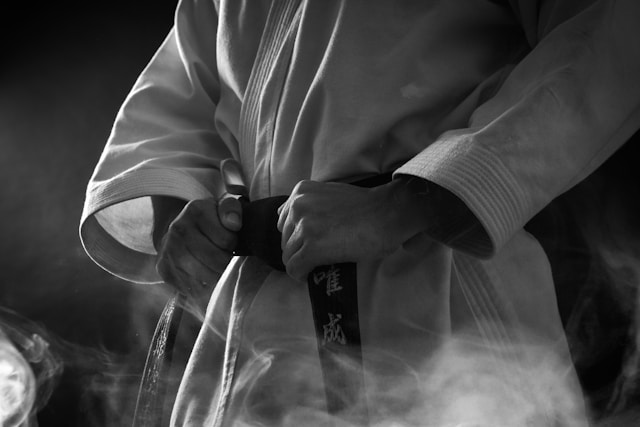
If I told you that a woman called Hortensia, aged 73, had become national champion in something, you probably would not think of karate first.
Maybe petanque. But no.
Hortensia Durán has been national karate champion in katas more than five times. Her latest national title was in the national kata league in Spain. And she did not start as a child, she started at 46.
How many 46-year-olds are behaving like pensioners out there?
She hadn’t done karate before. She started because her children did, and she decided to try. Then she kept going.
She didn’t discover some magical secret to ageing, discipline or motivation. The difference was that she didn’t treat her age as an instruction, a mandate. Karate became, in her own words, a complement to life. Something almost sacred. It made her stronger, it gave her physical and mental balance.
The point isn’t that age doesn’t matter, it’s that age shouldn’t automatically become an instruction to stop.
Most people get trapped here: they look at their age, their past, their body, their mistakes, their years of delay, and they start shrinking the future. They say things like, “I’m too old for that”, “that stage has passed”, or “I should have done it earlier”.
This isn’t about pretending age disappears (it doesn’t). The reason I’m talking about her wonderful example is so you can drop the idea that ageing makes you helpless.
Here’s the problem.
A lot of people stop living when they reach a certain number. They have already decided what kind of person they are allowed to become. They turn age into evidence that they cannot start (____fill in the blank).
Like evidence that the door is already closed. But most of the time, the door isn’t closed. It’s just embarrassing to open.
And that embarrassment is often enough to keep a whole life smaller than it needed to be.
Every week, I send an email where I write about the excuses people confuse with maturity, the decisions they postpone, and the psychological patterns that make them shrink their own future.
Subscribe here: