
The other day I was feeling a bit anxious about this constant overload of information we’re surrounded by. That bombardment of everything happening in the world, all the problems and crises that come with it. And after thinking it through, I came to the conclusion that it was time to stop.
The healthiest thing to do, when you feel overwhelmed by overexposure to information and the conflicts in the world, is to put up a filter, to adjust what reaches you and what doesn’t. Not only the information we consume, but also what reaches us through social interactions, through the disagreements and clashes of opinions.
You probably don’t even need to go on Twitter to get into an argument with a stranger. Surely at some point you’ve found yourself in a heated exchange with a friend who had a different point of view, or with a relative, or even in one of those dreadful WhatsApp groups that should be deleted from the face of the earth.
So, if you’re in one of those, good luck!
And precisely as I was thinking these days about how best to stay grounded in the kind of scenarios we live in, I came across a passage in a book I’m reading. It’s not a new book, it’s one I bought years ago, but only now have I felt like reading it slowly, because it’s too complex and needs time.
The book, which you probably know already, is The Hero with a Thousand Faces by Joseph Campbell.
In case you’ve just landed on Earth, or this subject has never caught your attention, Joseph Campbell was an American mythologist who studied the common patterns that appear in myths from around the world, and this book is, in simple terms, about how all human stories tell, at their core, the same journey of personal transformation.
And in one of the myths that appears in this masterpiece he talks about precisely what I was mentioning at the beginning: about the nature of evil in the world, and how conflict and confusion don’t always come from pure malice, but from the duality inherent to reality. I’ll leave it here for you to read:
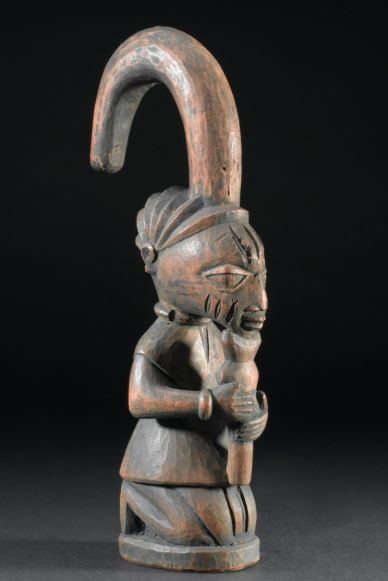
The difficult point is made vivid in an anecdote from Yorubaland in West Africa, which is told of the trickster divinity Edshu.
[One day this odd god came walking along a path between two fields. He beheld in either field a farmer at work and proposed to play the two a turn. He donned a hat that was on the one side red, but on the other white, green before and black behind [these being the colours of the four World Directions, i.e. Edshu was a personification of the centre, the axis mundi, or the World Navel]; so that when the two friendly farmers had gone home to their village, and the one had said to the other, “Did you see that old fellow go by today in the white hat?” The other replied, “Why? The hat was red.” To which the first retorted, “It was not; it was white.” “But it was red,” insisted the friend, “I saw it with my own two eyes.” “Well, you must be blind,” declared the first. “You must be drunk,” rejoined the other. And so the argument developed, and the two came to blows. When they began to knife each other, they were brought by neighbours before the headman for judgment. Edshu was among the crowd at the trial, and when the headman sat at a loss to know where justice lay, the old trickster revealed himself, made known his prank, and showed the hat. “The two could not help but quarrel,” he said. “I wanted it that way. Spreading strife is my greatest joy.”]
Here we could talk about how natural it is for human beings to have different visions of reality, and that there is no need to fight because of it. Both realities belong to the same world, to the same totality of reality.
If we look a little closer, we could say the same thing, that there are forces in the world who try to cause harm and stir trouble, as in this story from Yoruba mythology about the divinity who is something of a rogue and a deceiver, the god Edshu.
There are unknown forces in the world that push people to hold different perspectives and to fight among themselves, instead of understanding that all perspectives can be part of the same reality, and that they can interconnect like a puzzle made up of different pieces.
Forces that, like this god, delight in conflict, finding their greatest pleasure in watching it unfold.
But without becoming too conspiratorial, the ideal is to see things with more perspective, and to realise that maybe that argument you had with your friend, because they see things one way and you see them another, is not so different from the myth, where one sees the hat as red and the other as white.
Could it be that the hat has both colours?
In other words, that both perspectives could exist within the same reality.
So, what’s the point of arguing with someone when you might simply be seeing the same reality from a different angle?
Food for thought, isn’t it?
This myth also reminds us that the main problems of the world have always existed. The difference now is that we have loudspeakers and constant connection with others, not only with the people we know, but with those whose paths we will never cross.
We need to be careful with that, because we can become overwhelmed by this constant flow of information, connection and stimulation.
That’s why I created a small guide called The Mind Trash Digital Detox. It’s an invitation to assess how much noise surrounds you, mental, digital or emotional, and how it contributes to that constant sense of stress and unease you can’t quite explain. Have a look here.
Take care.
Love,
Noemi
P. S. The book by Joseph Campbell is this one, in case you’re interested.