I want to talk about why anger is so hard to let go of, even when the situation is over and we think we’ve moved on.
We’ll look at how the mind holds onto unresolved frustration, why we get stuck in mental loops, and a ritual backed by science involving fire and ashes that can help you release it all.
This may sound familiar. And if it does, it’s probably because you’ve been there too, trapped inside your own anger longer than you intended.
Not because you wanted to stay angry (hopefully not).
Not because the situation kept repeating itself (well, sometimes).
But because your mind kept bringing it back. Aha.
You replay the words. You imagine the perfect response. Your mirror is tired of your rehearsed comeback lines.
You carry the weight of what was said or done.
And somehow, even though the moment is over, it feels far from finished. This is where anger becomes heavy, not in the moment itself, but in the part that follows, the part where you stay stuck.
This is called “the trap of rumination”.
When something upsets us, we don’t simply feel it and move on. Instead, we start circling the same questions:
Why did they say that?
What did they mean?
How could they not see how wrong they were?
The motherfucker!!!? (that’s only when you work in retail)
Should I have reacted differently?
You see, each question feeds the next, so instead of finding resolution, the loop keeps the discomfort alive.
In psychology, this cycle is called rumination, aka repetitive thinking that doesn’t solve the problem but prolongs emotional distress.
While reflection can sometimes help us process experiences, rumination rarely brings clarity (rarely = never). It only extends the discomfort.
And what happens over time? The consequences show up:
- Higher stress
- Sleep problems
- Increased blood pressure
- Greater risk of heart issues
- Strained relationships
The longer we stay in the loop, the heavier it becomes. Literally.
Now.
Why is letting go of anger so hard? You’d wonder, and what’s really keeping us stuck?
You would expect that with enough time, anger would naturally dissolve. Uh uh. Sometimes it does. But often, it sticks because something feels unfinished.
This is what happens: we don’t just want to feel better, we want acknowledgment.
Maybe, an apology. Perhaps, understanding. Vengeance. We want the other person to recognise what they did.
Breaking news: that rarely happens.
We wait for a closure that doesn’t arrive. So, the unresolved situation keeps the anger alive. And while we wait, frustration quietly drains our energy. In this way, we end up trapped. Maybe…
- Hoping the situation will resolve itself
- Believing that holding on protects us
- Expecting the other person to change (fuhgeddaboudit!)
And so the emotional weight grows.
Sometimes, what keeps us stuck isn’t just the emotion itself, it’s the lack of a clear way to release it. Taking a physical action to represent an internal shift can help the brain register emotional change more effectively.
In psychology, this is often referred to as symbolic behaviour, like small, intentional gestures that help give closure to thoughts or feelings that otherwise stay unresolved.
This is what I want to talk to you about, and it brings us back to the title of this email, about how fire and ashes might help you let go of resentment. There’s a tradition, a ritual, you might want to know: La Noche de San Juan.
In Spain, there is a tradition that reflects this universal need to release what no longer serves us.
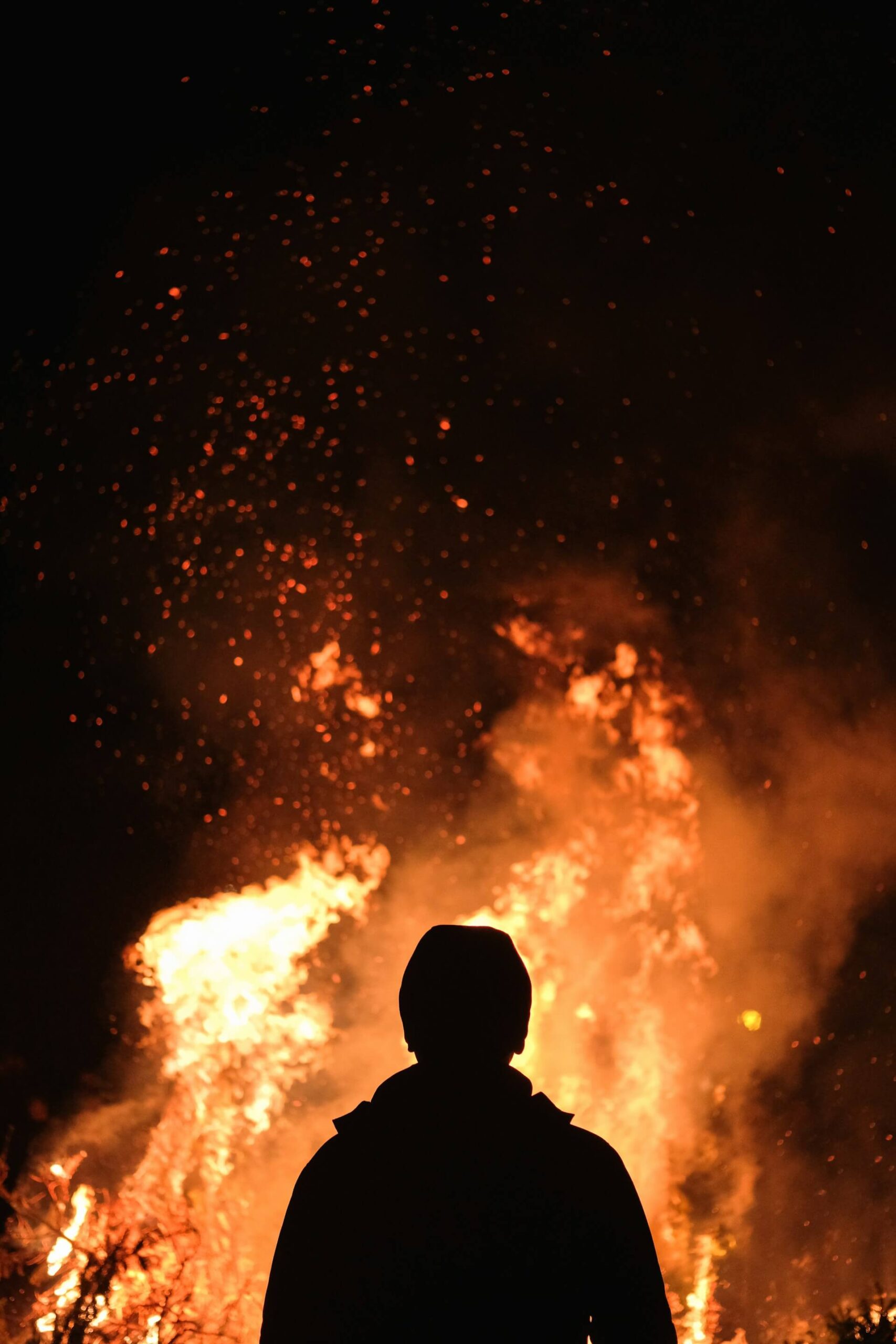
Every year on the night of 23rd June, there’s a traditional midsummer fire festival, La Noche de San Juan (St John’s Eve), where people gather to mark the start of summer. The main ritual centres around large bonfires.
But these fires are more than celebration, they serve a clear purpose.
Many people bring objects or pieces of paper where they’ve written what they wish to leave behind: regrets, painful memories, frustrations, habits, even toxic relationships. Or things they no longer need from the prior year, like old textbooks or similar. These are then burned in the fire.
The act is simple: burn what no longer belongs to you. Let go of what has weighed you down.
For some, it’s a private ritual. For others, a communal one to do with friends and family. But the meaning is always the same: what is burned is released.
Of course, burning a piece of paper doesn’t erase memories. But it creates a physical, deliberate moment. A clear signal to the mind that says, “I no longer need to carry this.”
La Noche de San Juan reminds us of something important: letting go isn’t always about thinking differently. Sometimes, we need an action, however small, to release the weight.
When we write something down, destroy it, or ritualise its release, we’re reinforcing the idea that the process is complete. It offers the mind a concrete way to move forward, especially when no external resolution is possible.
Remember, the mind works in symbolic ways.
There are scientific studies that back this up. In the next newsletter, I’ll share a fascinating scientific study that puts this idea to the test, showing how writing something down and then getting rid of it, even by burning it (like in La Noche de San Juan), can offer a real form of release when dealing with resentment.
Letting go of anger, resentment… isn’t about pretending nothing happened or denying what was said or done. It’s a conscious decision:
- To stop feeding the loop.
- To stop waiting for what may never come.
- To reclaim the energy we’ve been losing.
But knowing this and doing it are two different things. And that’s what we’ll explore in the next issue.
If you want to go deeper into the emotional work of letting go, the book Letting Go by David R. Hawkins is a classic for a reason. It offers a powerful method for releasing anger, resentment, and everything that tends to weigh us down emotionally, perfectly aligned with what we’ve explored here.
You can find it here.
Love,
Noemi
P.S. In the next newlsetter, I’ll show you a simple, research-backed way to start releasing anger, and it only requires a pen, some paper, and a bin (or a bonfire!).