Why is it so difficult to talk about death? And how can someone who died years ago still have such a powerful influence on the life you’re living now? If you’ve ever avoided a conversation about death, felt uneasy at a funeral or struggled to understand what happens to your relationship with someone after they’re gone, it is worth talking about it.
I’m Noemi, the psychologist behind Gangatu. In this article, I want to explore three connected questions: why non-existence frightens us, why so many cultures imagine a guide for the journey after death, and why the people we lose can continue to shape us. You may recognise more of your own experience in these stories than you expect.
At this time of year, towards the end of October, many cultures honour their dead. They perform rituals for loved ones who’ve passed away. It’s a way of honouring their memory and the love they still feel for them.
Other cultures take the opportunity to dress up and celebrate. And yes, it’s always good to have an excuse to dress up. A reason to be someone else (an Other), to put life on pause, or simply to watch horror films and soak up the October aesthetic.
Either way, these are days when we come a little closer, however quietly, to one of the greatest taboos in modern Western society: death.
That’s what I want to talk to you about over the next few days. And if you’re not ready for this subject yet (no one ever is), I suggest you give this newsletter a miss. Otherwise, you might realise that you’re alive and that, sooner or later, you’ll be crossing that threshold too.
Best be prepared, don’t you think?
Why the thought of non-existence unsettles us
We can think about death intellectually, but nobody knows what it means to cease to exist because we’ve never experienced it ourselves.
You see, there’s no representation of death in our own unconscious, and that stands in contrast to the efforts of philosophers throughout history, such as Epicurus and Schopenhauer, who tried to take the sting out of it.
Epicurus argued that we shouldn’t fear something we’ll never be there to experience. When we’re alive, death isn’t here; when death arrives, we’re no longer here. Schopenhauer, meanwhile, believed that ceasing to exist is the natural fate of everything that exists.
Both offer rational arguments for accepting that our lives are finite, but as I was saying, understanding death intellectually doesn’t mean we’re emotionally capable of coming to terms with our own non-existence.
Knowing that everyone dies is one thing. Imagining our own disappearance is quite another. When death is anonymous, it barely affects us; when it has our name on it, or the name of someone we love, it suddenly feels overwhelming, as though it were something unexpected.
We humans have a strong drive to keep going, to resist the idea of no longer being, of no longer existing. Even creating, writing, painting or leaving something behind can be understood as an attempt to ensure that some part of us survives.
Meanwhile, cultures around the world have tried to find an explanation: heaven, an afterlife, reincarnation, the soul, religion.
These ideas, entirely legitimate, provide a kind of defence against something that’s difficult to bear: non-existence.
But there’s a subtle point we tend to overlook. Surviving wouldn’t mean much to us if it meant we stopped being who we are.
What we want to preserve isn’t some abstract existence. We want to preserve our history, our memories, our fears, our desires, our loved ones, even everything we’ve lost.
For thousands of years, human beings have been inventing ways to make sense of an idea they find almost impossible to comprehend: that one day, they and the people they love will cease to exist.
And if we dig even deeper, we reach the heart of the matter: what distresses us isn’t simply dying. It’s the thought of no longer being ourselves, and of the people we love no longer being who they were.
Rational attempts to reduce the fear of death don’t necessarily make the anguish go away. And once people begin to imagine that death might not be the end, another question might appear:
if there is a journey into the unknown, do we have to make it alone?
Why we imagine someone to guide us
Terrified by the uncertainty of what comes after death, human beings across different cultures have imagined hundreds of stories about what might await us. Myths and religions to make sense of so much mystery. And, above all, to ease the anxiety surrounding the inevitable.
But once human beings have imagined that existence continues after death, another problem arises:
What happens during that journey?
Do we make it alone?
Faced with this question, many cultures came up with figures whose very purpose was to accompany the dead from this world to the next.
These are known as psychopomps, from the Ancient Greek for ‘guides of souls’.
These psychopomps weren’t there to judge or punish the dead, but to guide them, protect them and stop them from getting lost or losing their bearings. The belief in these beings came from the idea that death could leave the deceased in a state of confusion. They’d just left the world they knew and needed someone who knew the way.
Isn’t that what so many ghost stories are about? Dead people who can’t find ‘the other side’?
And we can see versions of this figure in different cultures, each responding to that same need:
In Greece, Charon ferried souls to Hades. Hermes also guided them safely to the underworld.
In Galicia, Spain, the Santa Compaña is a nocturnal procession of restless souls that makes its way along the roads, led by a living person carrying a cross. Its appearance is associated with death and the world of the dead.
In Christian tradition, St Michael the Archangel appears as a protector of souls, responsible for weighing them at judgement. Angels, meanwhile, accompany the souls of the dead to Paradise.
Among the Aztecs, the journey to Mictlan took four years and was full of trials. The deceased were accompanied by Xolotl, represented as a dog, to help them complete the journey.
In some Nordic traditions, there’s Helhest, a horse associated with carrying the dead. And among the Vikings, the Valkyries came for certain warriors and took them to Valhalla.
And so on.
We humans aren’t that complicated!
The stories, gods and animals change, but the same belief keeps appearing across different cultures: if death means entering unknown territory, we want to imagine that someone knows the way and will accompany us.
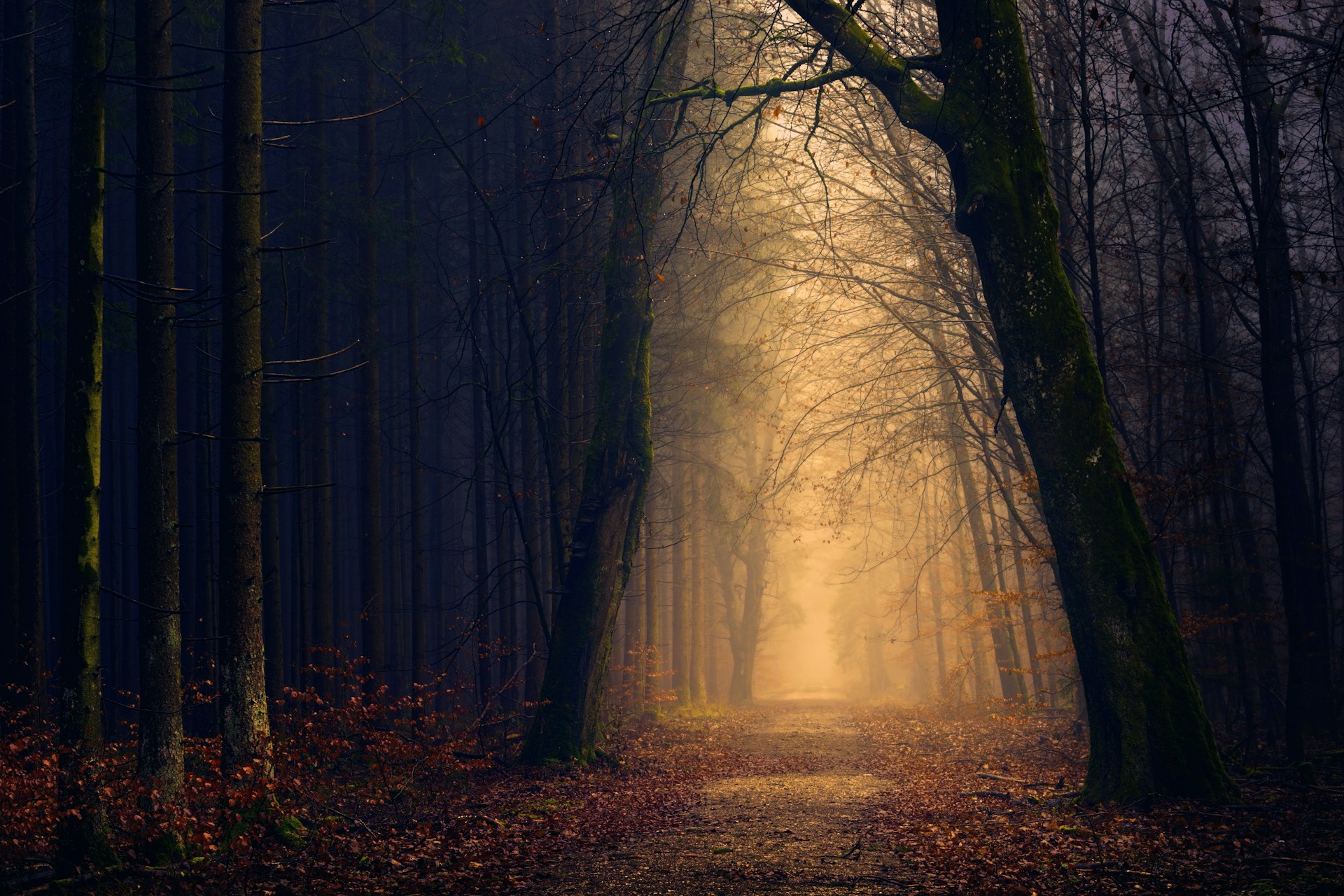
Even in The Divine Comedy, Dante finds himself lost in a forest that symbolises his personal and spiritual confusion. He doesn’t know how to get out, and then Virgil appears and tells him: you can’t go that way; you’ll have to take another path, and I’ll go with you. Together, they’ll have to make their way through Hell.
That’s what good therapy is like.
At certain points, the therapist acts as a kind of psychopomp: they can’t spare the patient the pain or magically pull them out of the difficulties they’re going through, but they can accompany them through territory that, at that moment, feels unfamiliar, frightening and confusing.
When faced with something that overwhelms us, we humans have needed to imagine (and seek out) figures who will accompany us through the transition.
In myths, the dead need a guide to cross over into the next world. The same way a patient may need a guide to make their way through the world that remains after a loss.
These myths imagine what might happen to the person who dies. But they also raise a question for those of us who remain:
does the relationship really end when someone is no longer physically here?
The relationship that remains after death
If a culture believes that the dead continue to exist in some form, then it also needs to decide what kind of relationship to maintain with them.
That explains why so many cultures haven’t treated death as though a relationship with someone automatically ends the moment they die. In other words, the person is no longer physically present, but they still have a place among the living. And rituals are a way of expressing and giving shape to that relationship.
For example, some societies buried the dead with things they believed they’d need on their journey: in ancient Egypt, food, personal belongings, furniture and small figurines intended to serve the deceased in the afterlife were placed alongside them; in some Chinese traditions, food, incense and representations of goods were offered so that ancestors could make use of them after death.
Ancient Semitic peoples took this even further. They believed the dead dwelt in Sheol, a kind of underworld, and that ancestors could still influence the lives of those left behind. That’s why they honoured them and maintained a connection with them through rituals. They even consulted people who were supposedly able to contact the dead and relay messages from Sheol.
Rituals, then, are one of the ways cultures have found to make room for the presence that remains after someone is gone.
But if we’re being completely honest, we don’t actually need to believe that the dead literally intervene in our lives from beyond the grave to accept that they still influence us. Someone may have died five, ten or twenty years ago and still live on within you in all sorts of ways.
Something they used to say to you, an expectation they placed on you, something they taught you, something they wouldn’t let you do, a way of seeing the world, a decision you make with that person in mind…
Certain words can even stay ‘etched’ in our minds and continue to influence us long after the person who said them has died.
I’m sure that’s brought back a memory.
People who were important to us continue to affect us after they die. It’s inevitable. That influence can be comforting, but it can also keep unresolved conflicts alive.
So it’s more accurate to say that death brings someone’s physical presence to an end, but doesn’t necessarily end the bond or the influence that person has on those still alive.
Maintaining a bond with those who’ve died can help us give the past its place without closing ourselves off to the future. When we manage to make that absence part of our story, we can remember without getting caught up in how things used to be and move forward without feeling we’re leaving that person behind.
Honouring the dead doesn’t necessarily mean ‘not letting them go’. It can be a very human way of acknowledging that the person still has a place in our story even though they’re no longer physically present.
Rituals can help us honour those who are no longer here and give them a place in our story. But some bonds continue to influence us in less obvious ways, sometimes accompanied by conflicts or feelings that are difficult to understand.
Final thoughts
Death changes the terms of a relationship. It ends a person’s physical presence, but it doesn’t erase the memories, expectations, habits or feelings that formed around them. Some of those things comfort us, while others take longer to understand, forgive or forget. Perhaps that is one reason people have spent thousands of years inventing ways to approach death: to find a way to live with what it means for those who are still here.
If you want to explore more of the psychology behind the difficult questions we tend to avoid, I write Gangatu’s email newsletter about human behaviour, relationships and the crucial decisions that define our lives. You can subscribe here for free:
Love,
Noemi